
Safety
Residence Hall Safety
All entrances to residence halls and apartments are locked at all times. Each room, suite, or apartment has its own lock and key, which do not include room numbers and cannot be traced if lost. All rooms also have locking windows.
Security is actively maintained through CCTV monitoring and routine patrols—both scheduled and random—by Public Safety and Housing and Residence Life staff. Residents should not allow strangers to enter and must ensure guests use their access cards. Housing and Residence Life staff enforce these security protocols and promote a community that respects individual and collective rights and responsibilities. They also offer educational sessions on crime prevention and personal safety.
University housing is reserved for properly assigned Rutgers students. Students are responsible for informing guests of university policies and for their conduct. Guests may not reside in university housing long-term, nor cause disruptions. Violations of visitor policies may lead to disciplinary action. Unauthorized individuals in university buildings may be arrested for trespassing by the Rutgers Police Department.
Safe campus features include secure doors and windows, functioning alarm systems, well-lit pathways and parking areas, and rapid emergency response. Maintenance and emergency services are central to Rutgers’ campus safety efforts. Building access is managed by an access control system to maintain a safe and secure campus while providing access to campus facilities. The Identity and Access Management department follows specific practices that are designed to enhance personal safety for all members of the university community.
Professional and student staff live on-site in residence halls and apartments. Professional staff supervise student staff, organize programming, and support residents. Resident Assistants are typically assigned to each floor or housing area. All staff receive extensive training in security, health, counseling, and emergency procedures. Housing and Residence Life staff are available during the day, with on-duty staff posted evenings and weekends.
Residence Life Coordinators—full-time, live-in professionals— as well as Graduate Program Coordinators, support student well-being, conduct nightly rounds, explain policies, and foster a safe, inclusive campus community.
Personal Safety
We encourage our students to consider the following for their personal safety and while navigating any city:
• Walk at a steady pace and in a confident manner. Criminals look for the most vulnerable victims.
• Be aware of your surroundings – stay in well-lit areas.
• Be conscious of people loitering on the streets.
• Avoid using alcohol, drugs, or other substances that could lessen your ability to sense your surroundings and make you an easier target for a crime.
• Stay with the crowd. There is safety in numbers. If you feel that you are being followed, look for and enter open restaurants, stores, public buildings, etc.
• Carry your purse close to your body. Purse snatchers like easy targets.
• Do not put all your money in one pocket, and do not carry large sums of cash. When driving, keep the doors locked.
• Don’t leave packages or valuables in view.
• Do not wear jewelry that will draw attention to you in an unsafe place.
• Report suspicious activity to law enforcement immediately.
• Do not prop open building, apartment, or suite doors, and do not provide residence hall access to strangers.
• Do not leave property unattended or unprotected.

Health & Safety Inspections
Health and Safety Inspections are conducted twice per semester to identify and address health, safety, sanitation, and maintenance issues in residential spaces. These inspections aim to reduce risks and educate residents about safe living conditions.
Common violations include:
• Covered or tampered smoke detectors.
• Overloaded electrical outlets or unsafe appliance usage.
• Prohibited items like candles, alcohol containers, and illegal substances.
• Pets or signs of animals in rooms.
• Items that could be misconstrued as weapons.
• Excessive trash, mold, or cleanliness issues.
• Obstructed or damaged smoke detectors, vents, or fire safety equipment.

Missing Student
As members of a larger community, we all carry a responsibility to look out for those around us. Roommates do not always possess a deep bond with each other, but we encourage residents to interact with their roommates on a regular basis to foster respect for each other and to learn each other’s normal habits. If you should learn that a roommate may be missing, has not been seen in their room for a few days in a row and contact with the individual cannot be established, or has not been seen on campus or attending classes as they normally would, report this information to a Housing and Residence Life staff member immediately. The University has a missing student procedure it must follow once this information is received but needs the assistance of students in the residential community.

Fire Safety
Fire safety is a major component of our overall safety and security program. State-certified fire inspectors provide fire safety awareness training sessions in the residence halls and conduct emergency evacuation drills to familiarize occupants with emergency procedures. University officials inspect all university buildings and enforce the New Jersey Uniform Fire Code. For more information, visit http://rues.rutgers.edu/fireguide.php.
Fire Drills
At least fire drills must occur during the academic year, including two in the fall and two in the spring. When the fire alarm sounds, whether during a drill or in an actual emergency, students and guests must immediately and within 4 minutes evacuate the building and fully cooperate with University and safety officials. Students and visitors should never assume a fire alarm is a false alarm. Students should close their door, proceed to the nearest exit, and leave the building immediately. Students should also familiarize themselves with all exits in their building, as knowing multiple exit routes can be crucial if one is blocked or inaccessible due to a fire. Elevators should not be used during fire alarms and fire equipment should only be used in the event of a fire.
Office of Housing & Residence Life
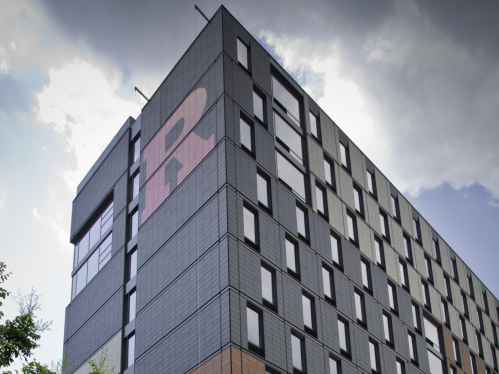
Camden Tower and Apartments
215 North Third Street, Camden, NJ 08102
Office: located in the first-floor lobby
330 Cooper Street
330 Cooper Street, Camden, NJ 08102
Office: located in the first-floor lobby
Hours: Monday through Friday from 9 a.m. to 4 p.m.