
Rutgers–Camden Honors Faculty Excellence with 2026 Chancellor’s Awards for Research and Creative Activity
Recipients represent the outstanding scholarship and creative activity taking place across the Rutgers–Camden campus.
Groundbreaking research, influential scholarship, and bold creative work took center stage as Rutgers University–Camden celebrated the 2026 Chancellor’s Awards for Research and Creative Activity. Drawn from both tenured and non-tenured faculty ranks and designed to recognize work that spans disciplines, methodologies, and forms of expression, this year’s recipients reflect the breadth and vitality of the university’s academic community.
“The Chancellor’s Awards for Outstanding Research and Creative Activity celebrate the exceptional scholarship and creativity that define Rutgers–Camden,” said Thomas Risch, vice chancellor for research at Rutgers University–Camden. “This year’s honorees reflect the intellectual range of our faculty and the many ways their work advances knowledge, inspires innovation, and contributes meaningfully to their fields, our campus, and the broader public good.”
Meet the 2026 Honorees

Anthony Grasso
Assistant Professor, Department of Political Science
School of Arts and Sciences–Camden
Anthony Grasso was recognized for his groundbreaking scholarship on the intersections of law, politics, and inequality in the United States. His award-winning 2024 book, “Dual Justice: America’s Divergent Approaches to Street and Corporate Crime” (University of Chicago Press), has been widely praised for its innovative blend of historical institutional analysis with political theory and legal scholarship, offering a powerful account of how competing ideas about crime and governance shaped U.S. criminal and regulatory systems.
In 2025, the book received the American Political Science Association’s Kammerer Award, which recognizes the best book published in the field of U.S. national policy. Across this and other honors from scholarly organizations, Grasso’s work has been recognized for its originality, clarity, and lasting relevance to contemporary debates about justice and inequality. His research continues to shape the understanding of how historical structures of power influence modern legal systems and policy outcomes.

Julianne Griepenburg
Assistant Professor, Department of Physics
School of Arts and Sciences–Camden
Julianne Griepenburg was recognized for her innovative research in light-responsive biomedical systems and nanoscale materials. In the simplest of terms, Griepenburg designs and engineers microscopic structures that can carry tiny materials and release them on demand when exposed to light. By embedding specially engineered nanoparticles into these structures, she can control exactly when and where the contents are released, down to very precise moments and locations.
Building on her early research at the University of Pennsylvania and establishing an independent program at Rutgers–Camden, she has developed pioneering approaches using ultrafast laser techniques to manipulate synthetic vesicles at the micro- and nanoscale. Her scholarship has produced highly cited publications, competitive NSF funding, invited reviews, and collaborative projects that span experimental and computational work. Griepenburg’s research continues to advance the design of smart materials with applications in biomedical delivery systems and responsive nanotechnology.
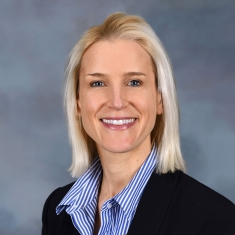
Camilla A. Hrdy
Professor of Law
Rutgers Law School
Camilla A. Hrdy was recognized for her influential scholarship in intellectual property law and innovation policy, with a particular focus on the legal challenges posed by generative artificial intelligence. Since joining Rutgers–Camden in 2024, she has produced an exceptional body of work published in leading law journals, including Yale Law Journal and Stanford Law Review, and has been cited multiple times by federal and state courts, who rely on her work for guidance on novel questions of law.
Her article “Beyond Trade Secrecy” (Yale Law Journal, 2023) was directly cited by the Federal Trade Commission in its 2024 Non-Compete Clause Rule, and her article “Abandoning Trade Secrets” (Stanford Law Review, 2021) has been cited by at least three courts—including the U.S. Court of Appeals for the Fifth Circuit—to justify a more rigorous application of the "independent economic value" requirement in trade secret disputes.
Through a distinguished body of scholarly work and an increasingly prominent record of public engagement, Hrdy’s work bridges academic rigor and real-world application, shaping how the law responds to emerging technologies and the evolving landscape of innovation. Her scholarship does more than analyze the law; it anticipates the future of innovation and helps establish the doctrinal guardrails needed to navigate it.

Kristie McAlpine
Assistant Professor, Human Resources/Organizational Behavior
Rutgers School of Business–Camden
Kristie McAlpine was recognized for a sustained and impactful research agenda focused on how organizations can better design modern work to support employee inclusion, performance, and well-being. Her scholarship examines timely questions surrounding hybrid and remote work, workplace inclusion, leadership, and the boundaries between work and personal life, drawing on rigorous field studies, experiments, and theoretical synthesis.
Over the past three years, she has published extensively in top management journals, including Administrative Science Quarterly and Human Resource Management, alongside influential review and theory articles that have helped shape scholarly and practitioner understanding of virtual leadership, commuting, and disability in the workplace.
Her work has also reached broad public and managerial audiences through major media coverage and practitioner outlets – including NPR, Fortune, Scientific American, The Philadelphia Inquirer, and the Chicago Sun-Times – underscoring its relevance beyond academia. Collectively, McAlpine’s research reflects both intellectual depth and real-world impact in advancing evidence-based approaches to contemporary work design.

Nir Yakoby
Professor, Department of Biology
School of Arts and Sciences–Camden
Nir Yakoby was recognized for his sustained and innovative contributions to the study of developmental biology. His research centers on understanding the evolution of eggshell morphologies and how gene expression is regulated in developing tissues. Specifically, by using the fruit fly (Drosophila) as a model system, he studies how several cell-signaling pathways, including the epidermal growth factor receptor, control cell differentiation and morphogenesis, or the biological process that gives an organism its definition and shape.
His recent work has expanded both conceptual understanding and methodological approaches in the field, including a 2025 study where Yakoby highlighted the limitations of relying on a small number of model organisms in developmental biology, showing that key signaling pathways can vary dramatically across species and arguing for the development of new genetic tools, including CRISPR-based approaches, to expand the range of organisms available for research.
In another 2025 study, done collaboratively with colleagues at the Center for Computational and Integrative Biology at Rutgers–Camden, Yakoby helped develop the first dynamic mathematical model of EGFR signaling during fruit fly egg development.
Supported by substantial external funding from the NIH and NSF, including a prestigious NSF CAREER Award, Yakoby’s research program combines experimental and computational biology to advance fundamental knowledge of developmental processes while training the next generation of scientists.