
Listen Now
This unique program gives doctoral students the tools, space, and encouragement they need to make meaningful progress on their dissertations.
For doctoral students deep in the often-isolating work of dissertation writing, the process can feel overwhelming and seemingly endless. The newly created Dissertation Boot Camp at Rutgers University–Camden’s Graduate School is designed to address that challenge by offering doctoral candidates something rare: time, structure, and a sense of shared purpose.
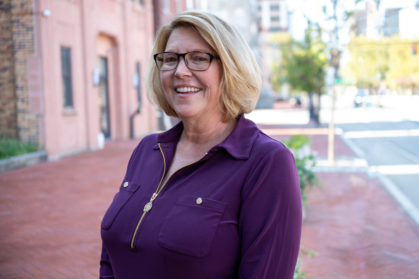
“The need for something like this came directly from student feedback,” said Graduate School Associate Dean Michelle Meloy. “We asked our doctoral students what the Graduate School could do to better support them toward degree completion, and the topic of providing guidance and programming on how to successfully navigate the post-qualifying stage of their academic journey came up again and again.”
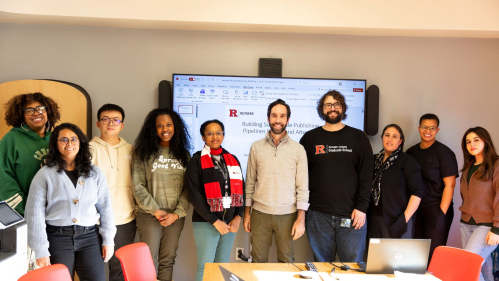
Launched in January 2026 under the guidance and leadership of Assistant Dean Mitch Larson, the weeklong program brought together 15 post-qualifying Ph.D. candidates from across the school’s four disciplines for focused writing sessions, guided programming, and community-building support designed to help students make significant progress on their dissertations.

“The more time I spent with our students, the clearer it became that they needed a few key things: a setting that gave them dedicated time and space to focus on their writing, opportunities to feel connected to other students at the same stage of their academic journey, and access to Rutgers’ extensive network of faculty and staff who can share advice, tips, and strategies for success,” Larson said. “Those are exactly the things this program was designed to provide.”
Helena Cabezas, a Ph.D. student in the Department of Public Affairs and Community Development, appreciated both the community of the cohort and the dedicated time and space to work in a distraction-free setting.
“The opportunity to meet people who are going through the same process, and being able to share the ups and downs, get encouragement or feedback, and just connect with people who are in the same process, is valuable,” she said.
“I think for me it was about having accountability,” added Dua Malik, a Ph.D. student in the prevention science program. “First thing in the morning, you checked in with the people in your group, asking them how their day was and what their goals were for the day ahead. So, you had that accountability of checking in and staying until your work is finished for the day. Seeing other people also working, you felt more motivated to stay and finish what you set out to do.”
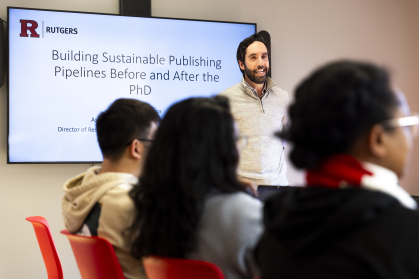
In addition to the sustained writing sessions, the inaugural boot camp session featured specially designed programming focused on the academic, institutional, and career-related considerations doctoral candidates must navigate simultaneously. Led by Rutgers–Camden faculty and staff, sessions covered topics such as electronic thesis and dissertation approval, developing a scholarly identity and long-term research trajectory, publishing expectations and strategies, and potential career pathways after graduation.
The Graduate School is also developing a full slate of programming for all of its students in response to the success of the inaugural boot camp. This semester, the school will launch what it calls “accountability” groups over the winter and summer sessions for members of the first cohort of the boot camp to allow them to continue writing with fellow students and plans to launch smaller versions of the boot camp for pre-qualifying and master's students in the near future.
“We want our graduate students to feel a real sense of community,” Larson said. “Graduate work can often be a long, difficult, and isolating process. Opportunities to connect with peers who understand what they are experiencing are important. Our hope is that these programs help bridge that gap and ensure students feel supported as they complete their graduate studies.”


