
Projects & Impact
Projects & Impact
Projects
Cohort 1
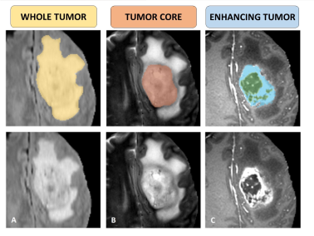
Health Project: AI-Powered Brain MRI Tumor Segmentation
AI Coach: Iman Dehzangi, PhD
Team: Malav Champaneria, Amisha Rastogi, Jinal Panchal
The primary objectives of this project are to Design and implement a U-Net-based semantic segmentation architecture capable of accurately delineating LGG tumor boundaries from brain MRI scans.
Investigate the impact of integrating clinical patient metadata (demographic, histological, and genomic features) into the segmentation network through bottleneck-level feature fusion.
Evaluate the effectiveness of Attention Gate mechanisms in the decoder pathway for selectively emphasizing diagnostically relevant spatial features.
Systematically benchmark four architectural variants to quantify the marginal contribution of each design innovation.
Deploy the best-performing model as an interactive Streamlit-based clinical decision-support tool.
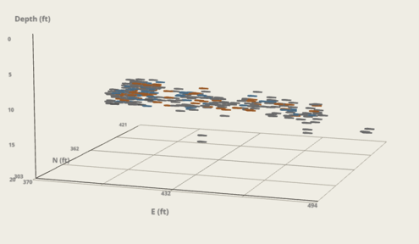
Archeology Project: Naming the Unnamed: A Burial Mystery on Arch Street
AI Coach: Ojobo Agbo Eje, MS, MBA
Team: Dr Kimberlee Moran, Lindsay Peck, Alwin Philip, Amelia Stieglitz, Carla Villacis, Aryan Bhat
The Arch Street Project is a multi-institutional, cross-disciplinary excavation of the First Baptist Church of Philadelphia’s cemetery. Traditional archaeological approaches provide qualitative insight into burial practices, but are not suited for systematically integrating heterogeneous datasets at scale. Linking biological profiles, spatial coordinates, and historical records requires methods capable of operating under uncertainty
This project proposes a hybrid computational framework that integrates probabilistic identity inference, spatial clustering, and relational reasoning. Specifically, the approach combines a Bayesian-inspired identity matching model that evaluates candidate identities using demographic, temporal, and contextual features. Designing an overlay for all the data for each burial in such a way that different data categories and patterns can be visualized on the 3-D map. A density-based spatial clustering algorithm (DBSCAN) was applied to three-dimensional burial coordinates to identify spatial groupings, and a cluster-based refinement mechanism that incorporates relational context into identity inference by leveraging patterns among nearby burials.
The framework is further supported by an interactive visualization platform, enabling human-in-the-loop analysis and interpretation.

New Jersey Behavioral Health Access Navigator
AI Coach: Dr. Andrei Nikiforov
Team: Caitlin Cohen, Sarthak Chandervanshi, Sangeetha Maheshwari, Joseph Thorpe
Access to behavioral health care remains a significant challenge due to the fragmented nature of the healthcare system. Individuals in need of mental health or substance use treatment often face difficulties identifying appropriate providers, as information is dispersed across multiple platforms, is frequently outdated, and is lacking clarity regarding services offered. This issue is particularly critical during care transitions, such as hospital discharge, when timely access to appropriate follow-up care is essential for patient stability and recovery.
The primary objective of the Behavioral Health Access Navigator is to improve the efficiency and accuracy of provider selection by transforming fragmented and static datasets into a structured, searchable, and ranked system. By organizing and prioritizing provider information, the system aims to reduce the time required to identify suitable care options and improve continuity of care during critical transitions. Unlike traditional predictive modeling systems, this project does not rely on a defined target variable. Instead, it functions as a decision-support and recommendation system, using rule-based logic and data-driven filtering to generate relevant provider rankings. The focus is on enhancing usability, transparency, and accessibility of information rather than predicting outcomes.
Impact
- 120+ Participants Engaged
- 13 Cohort Participants
- 3 Projects
- 2 AI Conversations sessions
Get Involved
Rutgers University–Camden AI Campus (RuCAIC)
Rutgers Camden Research Office
323 Cooper Street
Camden, NJ 08102
Phone: 856-225-2865
Email: aicampus@camden.rutgers.edu